
The inside guide to payment processor migrations: what your current processor won't tell you.
Migration is a conversation the majority of processors will do their utmost to avoid. Why dwell on a topic that explains how to leave them? It's like that old song says, "Breaking Up Is Hard to Do."

But here's the truth processors don't want to share: switching providers doesn't have to be the stress-inducing challenge many believe it to be.
Key Takeaways
- 4–6 months: the time most processor migrations take (some up to a year depending on complexity)
- Three migration methods exist: seamless BIN transfer, new BIN/new cards, and gradual re-carding , each with distinct trade-offs
- Your existing processor may not cooperate, expect potential delays, fees, and procedural obstacles
- Key selection criteria: transparent pricing, payment method support, API integration, migration expertise, and ESG credentials
- Modern cloud-native processors offer microservices architecture that enables migrations without system downtime
Breaking free: The reality of a processor migration
Many businesses find themselves stuck with their current payment processor despite growing dissatisfaction. They're held back by fears about migration costs and the complexity of running parallel contracts and operations.
Here's what processors don't tell you: with the right team and a well-structured strategy, migration can be a seamless transition that propels your business forward.
Why Consider a Processor Switch?
The Technology Evolution
Just as you upgrade your smartphone for better capabilities, your payment processing should evolve too. Today's consumers expect lightning-fast, stable, diverse, scalable, configurable payment options. Staying ahead means having a processor that delivers these capabilities without breaking a sweat, and without geographical limitations.
Expanding your payment options isn't just a nice-to-have, it's a revenue driver, opening doors to a broader customer base.
Processing Fees
While fees are inevitable, modern cloud-native processors leverage cutting-edge technologies to offer more competitive rates. As your business grows and transaction patterns change, your costs should reflect these shifts.
The key is understanding how scaling against different pricing models affects your bottom line. Modern processors often provide more transparent structures.
Transaction Volumes: Growing Pains
Picture this: your marketing campaign goes viral, transactions spike, and your processor can't keep up. Your processor should scale with your success, whether it's steady growth or unexpected surges.
Scalability isn't just about handling more transactions. It's about maintaining the same level of service and security regardless of volume.
Security and Compliance
In today's landscape, security is a mandate. Your processor must maintain optimal security across all payment gateways while staying ahead of emerging threats. If your current processor's technology stack seems dated, it's time to consider an upgrade.
ESG, Ethics, and Purpose
Modern business isn't just about profits , it's about purpose. An increasing number of companies make decisions based on ESG criteria. Working with a carbon-neutral processor isn't just good for the planet; it's a strategic business decision aligned with growing consumer expectations.
Selecting Your New Processing Partner
1. Transparent Pricing
Look for processors who lay their cards on the table. Hidden fees and complex pricing structures should be red flags. The best processors offer clear pricing that helps you understand exactly what you're paying for.
2. Payment Method Support
Your customers want options. A modern processor should support:
- Traditional credit and debit card processing
- Digital wallet integration
- Alternative payment methods
- Emerging payment technologies
- Tokenisation capabilities
- Real-time payment processing
3. Integration Capabilities
Strong APIs are your ticket to smoother migration and faster market entry. Look for processors with robust, well-documented APIs that integrate seamlessly with existing systems.
4. Customer Support Excellence
Evaluate support availability, response time guarantees, technical expertise, communication channels, track record with migrations, and incident response procedures.
The Migration Process
Data Transfer: The Heart of Migration
Data transfer requires meticulous planning. Your new processor should have proven methodology for secure data extraction, validation, error handling, and reconciliation.
A Warning About Your Existing Processor
An often-overlooked issue: your existing processor might not adequately support your migration. They can, and often do, charge large fees for migration projects, including contract termination fees.
They might also hinder your process by not cooperating as rapidly as you'd like. After all, it's in their interest for you not to leave.
Post-Migration Verification
After transfer, rigorous checking ensures data accuracy, system functionality, processing continuity, security compliance, and reporting accuracy.
Customer Feedback
Maintain a direct line for customer feedback during and after migration. This improves the payment experience and maintains strong customer relations.
Migration Methods: Choosing Your Path
1. The Seamless Switch (Existing BIN Transfer)
The existing active cardholder keeps their current card. Data migration is coordinated as a series of transfers, with smaller delta updates as the migration date approaches. On an agreed date, network traffic switches to the new platform.
Benefits: Business continuity, no cardholder reissuance, existing card stock remains valid, minimal cardholder impact.
Challenges: Complex coordination, real-time cutover risks, processor cooperation needed.
2. The Fresh Start (New BIN, New Cards)
Lower risk for portfolios with large numbers of active cards with balances and history. Allows a clean cutover but impacts cardholder experience as they switch to new cards.
Benefits: Lower risk for large portfolios, clear timeline, clean data environment, modern security features.
Challenges: Customer communication needed, card replacement logistics, higher initial costs.
3. The Gradual Transition (Re-Carding)
New cards are produced on the target platform while current cards remain active. As customers receive new/replacement cards, old cards become obsolete. The portfolio naturally terminates on the existing platform over time.
Benefits: Natural transition pace, minimal disruption, lower operational risk, controlled rollout.
Challenges: Extended timeline, dual platform operation, potentially higher costs for large portfolios.

What's the Best Migration Method?
There's no one-size-fits-all approach. Key considerations include:
- Transaction volume and card portfolio size
- Number of programmes/products
- Number of BINS, Networks and Issuers
- The geographical reach across regions
- Customer types and transaction patterns
- Cardholder experience impact assessment
- Risk assessment for chosen migration path
- Relationship with existing processor
- Operational impact during migration period
Time, Politics, and Success
A typical migration takes 4–6 months, though some extend to a year. Your current processor might not be enthusiastic about helping you leave. They might delay responses, charge unexpected fees, create procedural obstacles, limit cooperation, or complicate data access.
That's why choosing a new processor with proven migration expertise is crucial.
The Cloud-Native Advantage
Modern cloud-native designed processing offers distinct migration advantages:
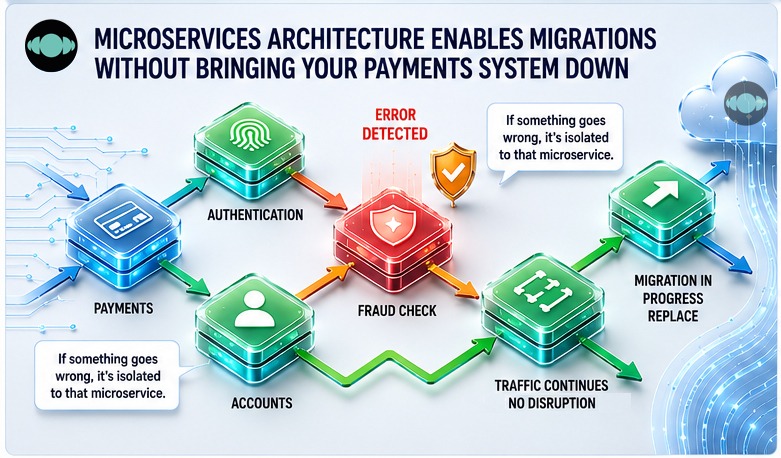
- Microservices architecture enables migrations without bringing your payments system down , if something goes wrong, it's isolated to that microservice
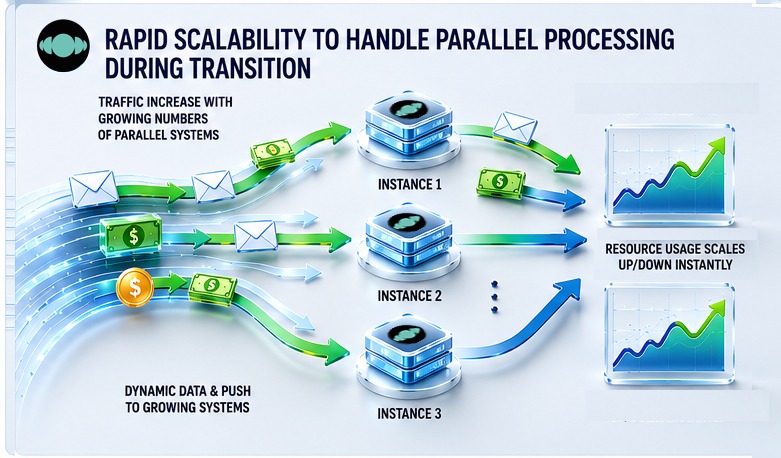
- Rapid scalability to handle parallel processing during transition
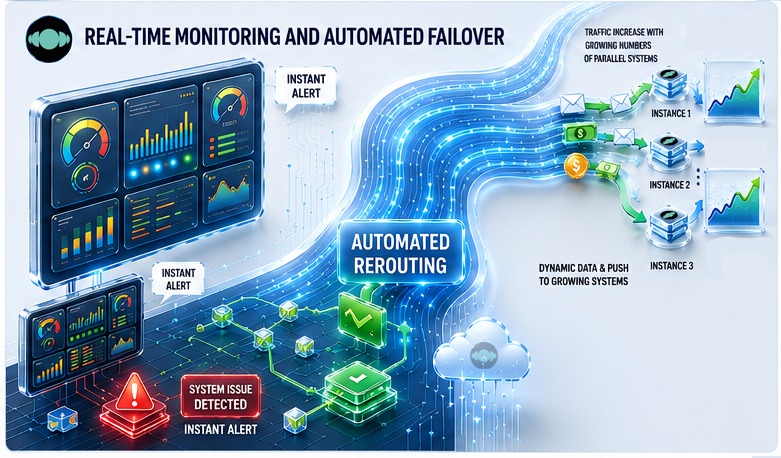
- Real-time monitoring and automated failover
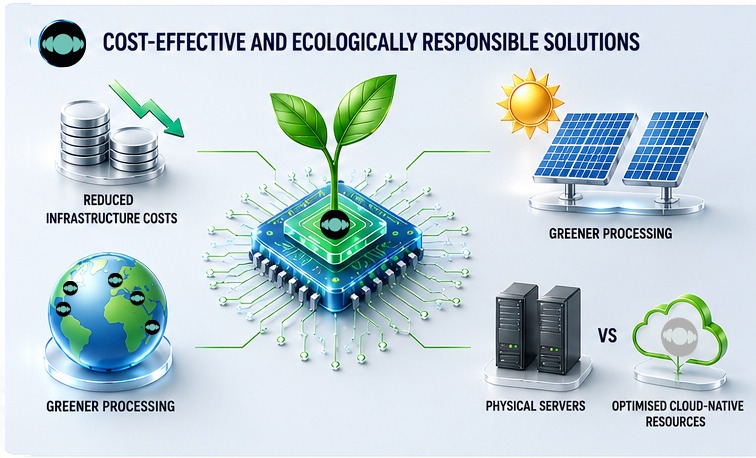
- Cost-effective and ecologically responsible solutions
FAQ
Does CLOWD9 have experience with live migrations?
Yes. CLOWD9 has already completed a number of successful migrations, offering any customers who may be thinking of migrating, complete reassurance that CLOWD9 had direct hands-on experience in handling migrations from start to finish.
How long does a typical issuer processor migration take?
Most migrations take 4–6 months, though complex migrations can extend to a year depending on portfolio size, the migration method chosen, and the level of cooperation from the existing processor.
What are the main risks in processor migration?
Key risks include data integrity, service continuity, and cardholder impact. However, these can be effectively mitigated with proper planning, rigorous testing, and choosing a processor with proven migration expertise.
What should I look for in a new issuer processor?
Key factors include technical capabilities, migration expertise, security features, pricing transparency, support quality, scalability, regional coverage, customer support and increasingly, ESG credentials and sustainability track record.
Considering a processor migration? CLOWD9's cloud-native platform has delivered seamless migrations for banks and fintechs worldwide , with microservices architecture that ensures zero downtime during transition. Let's talk.
H1 - What’s a Rich Text element?
H2 - Static and dynamic content editing
H3 - How to customize formatting for each rich text
H4 - How to customize formatting for each rich text
H5 - How to customize formatting for each rich text
H6 - How to customize formatting for each rich text
.png)
Headings, paragraphs, blockquotes, figures, images, and figure captions can all be styled after a class is added to the rich text element using the "When inside of" nested selector system.
- Lorem
.jpg)



.jpeg)


